Trading live futures with the BDH crew turns screen time into a repeatable prop firm process
Need articles like this for your video? They help promote it on YouTube and Google — order them in the Telegram bot @sat_sit_bot. Articles with your video embedded are written and posted by the bot itself — on popular topical sites (no ads). Your first 50 articles are free.
· based on the channel Patrick Wieland
Key takeaways
- Patrick Wieland streams live futures trading every trading day from BDH floors in South Florida and California under the handle Daddy Warbux.
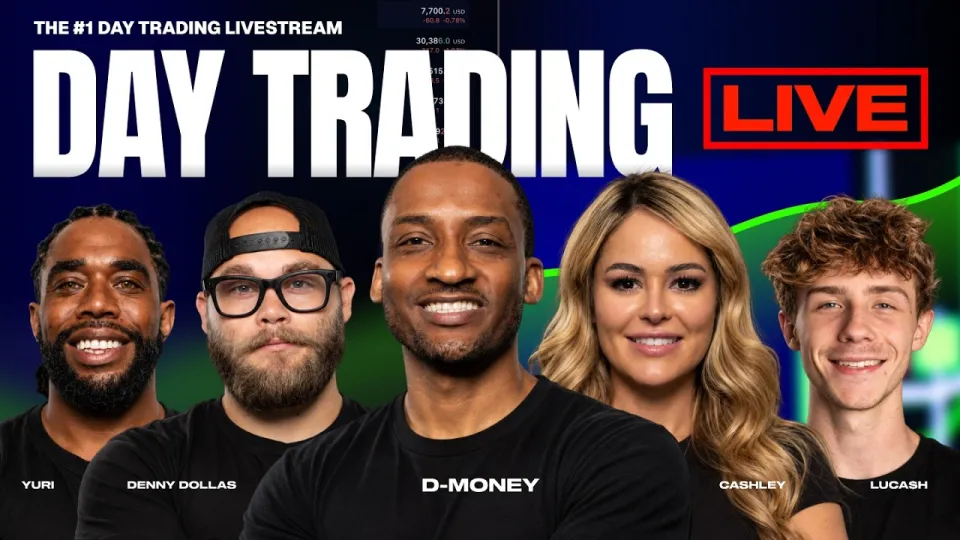
- The BDH crew includes Damareous Young (DMoney), Lucas Kennard (Lucashhh) and Denny Jones (Denny Dollas).
- OnlyPropFirms ranks Lucid Trading first, TakeProfitTrader second and Apex Trader Funding third among prop firms.
- Patrick Wieland sells a two-hour course covering the strategy he teaches and trades live for $99.
- Viewers repeatedly ask which setup is being used and where to buy it, so the stream doubles as live trade education.
Trading live futures means reading real order flow on a chart while someone else is risking real capital, and that is exactly what the BDH streams deliver every trading day. Patrick Wieland, known on stream as PW or Daddy Warbux, runs a live futures day trading show from BDH floors in South Florida and California, with market analysis, prop firm reviews and giveaways built into the session. For a trader who wants to see a repeatable process instead of a highlight reel, the format is closer to an apprenticeship than a broadcast.
The core promise is simple: watch a professional futures trader manage entries, exits and risk in real time, then copy the structure rather than the trades. That distinction matters, because the setups change with the market while the process behind them does not.
What the BDH live futures show actually covers
The BDH show is a full trading day compressed into a stream, not a single trade idea. Patrick Wieland and his crew run it as a working desk with cameras on, so the content mixes live execution, commentary and the business side of trading.
- Real-time futures trading on index products, with entries and exits called as they happen.
- Market analysis before and during the session, including levels and bias.
- Prop firm reviews and rankings, with discount codes for the firms the crew uses.
- Giveaways and audience interaction, which keeps the chat active during slow periods.
- Recurring segments on strategy, psychology and account management.
The crew is part of the product. Alongside Patrick, the desk includes Damareous Young (DMoney), Lucas Kennard (Lucashhh) and Denny Jones (Denny Dollas). Each trader brings a slightly different style, which is useful for viewers because it shows that futures day trading is not one rigid method.
Why prop firm accounts dominate modern futures trading
Prop firm accounts have become the default capital route for retail futures traders because they separate skill from savings. Instead of funding a personal account large enough to survive drawdown, a trader passes an evaluation and trades the firm's capital under a defined loss limit.
The BDH crew leans into this model and publishes a ranking through OnlyPropFirms.com. The current top three are Lucid Trading first, TakeProfitTrader second and Apex Trader Funding third, followed by Tradeify, Legends Trading, BluSky Trading, TradeDay and MyFundedFutures. The list is commercial, since the links are affiliate links, but the practical value is the comparison itself: account sizes, drawdown rules, payout schedules and reset policies differ enough that choosing badly costs real money.
Rules to check before buying any evaluation:
- Daily loss limit and trailing versus static drawdown.
- Whether the drawdown trails intraday or only on closed balance.
- Payout frequency and the minimum number of trading days required.
- Consistency rules that cap how much of your profit can come from one day.
- Platform and data fees, which are often excluded from the advertised price.
A trader who ignores those details can pass an evaluation and still fail the funded account in a week, which is why the ranking conversation matters more than the discount code.
The trading strategy Patrick Wieland teaches and trades live
Patrick Wieland's approach is taught in a two-hour course priced at $99, and the same strategy is what he executes on stream. The value of that combination is verification: a viewer can watch the method applied live rather than only in edited examples.
The framework rests on a few durable ideas that apply to almost any intraday futures style:
- Trade from levels, not from feelings. Predetermined zones decide where a trade is even considered.
- Wait for confirmation. A level alone is context; a reaction at the level is the trigger.
- Define risk before entry. Stop placement comes from structure, not from a dollar amount you are willing to lose.
- Size to the stop. Position size is the output of the stop distance and the account's risk per trade.
- Review the session. The stream itself becomes the journal when a trader writes down what worked.
That last point is where live shows outperform recorded courses. Watching someone sit through a slow market, skip a marginal setup and take a single clean trade teaches patience in a way that a highlight video cannot.
Common viewer questions about live trading setups
Viewers repeatedly ask two things: which setup is being worked, and where the exact setup can be purchased. Both questions point at the same misunderstanding about how live futures trading works.
A setup on a live stream is a decision tree, not a signal. The trader is weighing context, level quality, volume behavior and the risk already taken that day. Two identical-looking entries can be different trades depending on whether the account is up or down, whether a news release is pending, and whether the daily loss limit is close. Copying the entry without the context is how most viewers lose money following any stream.
The second question has a direct answer: the strategy Patrick Wieland teaches is packaged in the two-hour course sold through OnlyPropFirms.com for $99, and it is the same material he applies on stream. Anything beyond that, such as a signal service promising the exact trades, should be treated with suspicion.
A practical way to use the stream:
- Pick one instrument and watch only that instrument for a week.
- Write down every level mentioned before the trade happens.
- Note whether the trader skipped setups and why.
- Compare your own paper trades against the stream's decisions.
- Change one variable at a time, not the whole method.
Risk, expectations and the honest limits of watching a stream
Live futures trading carries substantial risk, and no stream removes that. The BDH disclaimer is explicit that content is educational and entertainment only, that some links are affiliate links, and that past performance does not guarantee future results.
Three limits are worth stating plainly. First, a stream shows one trader's day, not a statistical sample, so a good session proves nothing about edge. Second, prop firm evaluations impose rules that a personal account does not, so a strategy that works on a cash account can fail an evaluation on drawdown mechanics alone. Third, the business around trading, including affiliate rankings and course sales, is a separate income stream from trading itself, and viewers should read it that way.
The upside is equally real. Screen time with a disciplined trader shortens the learning curve for anyone who treats the stream as a study session rather than a tip line.
What a viewer should take away from the BDH desk
The BDH show, hosted by Patrick Wieland, is best understood as a working futures desk with an audience rather than a signal room. It combines live execution, prop firm comparisons through OnlyPropFirms.com and a paid strategy course, and the crew of DMoney, Lucashhh and Denny Dollas keeps the pace varied across the session. A trader who watches for structure, risk rules and skipped setups will get far more value than one who copies entries. The realistic goal is not to replicate a single trade but to build a process that survives a losing week. Treat the rankings, the course and the stream as inputs to your own plan, and keep position sizing and loss limits under your control.
Source: LIVE DayTrading! #1 Watched Futures Trading Show! · Markdown version